


 Cart
Cart
 sales@molnova.com


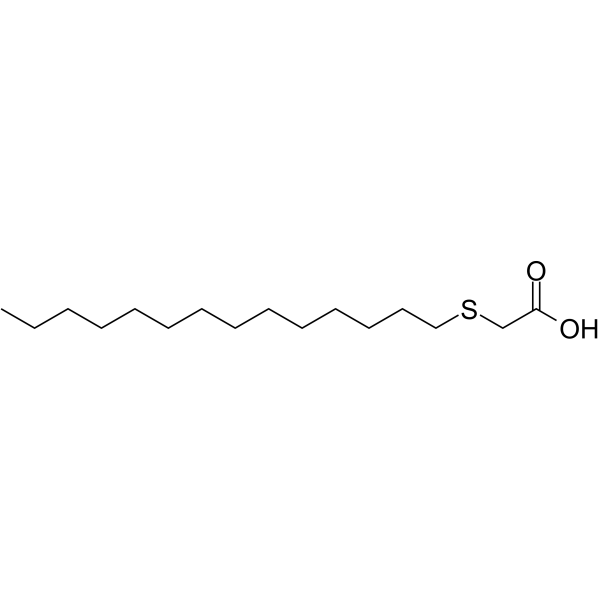
Tetradecylthioacetic acid
CAS No. 2921-20-2
Tetradecylthioacetic acid( —— )
Catalog No. M28915 CAS No. 2921-20-2
Tetradecylthioacetic acid is a synthetic fatty acid with a sulfur substitution in the β-position. This modification renders TTA unable to undergo complete β-oxidation and increases its biological activity, including activation of peroxisome proliferator activated receptors (PPARs) with preference for PPARα.
Purity : >98% (HPLC)
 COA
Datasheet
HNMR
HPLC
MSDS
Handing Instructions
COA
Datasheet
HNMR
HPLC
MSDS
Handing Instructions
| Size | Price / USD | Stock | Quantity |
| 5MG | 35 | In Stock |


|
| 10MG | 58 | In Stock |
|
| 25MG | 102 | In Stock |
|
| 50MG | 160 | In Stock |
|
| 100MG | 250 | In Stock |
|
| 200MG | 376 | In Stock |
|
| 500MG | 614 | In Stock |
|
| 1G | Get Quote | In Stock |
|
Biological Information
-
Product NameTetradecylthioacetic acid
-
NoteResearch use only, not for human use.
-
Brief DescriptionTetradecylthioacetic acid is a synthetic fatty acid with a sulfur substitution in the β-position. This modification renders TTA unable to undergo complete β-oxidation and increases its biological activity, including activation of peroxisome proliferator activated receptors (PPARs) with preference for PPARα.
-
DescriptionTetradecylthioacetic acid is a synthetic fatty acid with a sulfur substitution in the β-position. This modification renders TTA unable to undergo complete β-oxidation and increases its biological activity, including activation of peroxisome proliferator activated receptors (PPARs) with preference for PPARα.(In Vivo):Mice receiving HFD supplemented with 0.75% (w/w) TTA had significantly lower body weights compared to mice fed the diet without TTA. Plasma triacylglycerol (TAG) was reduced 3-fold with TTA treatment, concurrent with increase in liver TAG. Total cholesterol was unchanged in plasma and liver. However, TTA promoted a shift in the plasma lipoprotein fractions with an increase in larger HDL particles. Histological analysis of the small intestine revealed a reduced size of lipid droplets in enterocytes of TTA treated mice, accompanied by increased mRNA expression of fatty acid transporter genes. Expression of the cholesterol efflux pump Abca1 was induced in the small intestine, but not in the liver. Scd1 displayed markedly increased mRNA and protein expression in the intestine of the TTA group.
-
In Vitro——
-
In Vivo——
-
Synonyms——
-
PathwayMetabolic Enzyme/Protease
-
TargetPPAR
-
Recptor——
-
Research Area——
-
Indication——
Chemical Information
-
CAS Number2921-20-2
-
Formula Weight288.49
-
Molecular FormulaC16H32O2S
-
Purity>98% (HPLC)
-
SolubilityIn Vitro:?DMSO : ≥ 2 mg/mL (6.93 mM)
-
SMILESCCCCCCCCCCCCCCSCC(O)=O
-
Chemical Name——
Shipping & Storage Information
-
Storage(-20℃)
-
ShippingWith Ice Pack
-
Stability≥ 2 years
Reference
1.EUBULUS BIOTHERAPEUTICS - WO2021/183702, 2021, A1.
molnova catalog



related products
-
Tesaglitazar
Tesaglitazar is a potent and selective peroxide PPARα / γ receptor dual agonist with a more potent affinity for PPARγ than PPARα, The EC50 values for rat PPARα and human PPARα were 13.4 μM and 3.6 μM, respectively, and 0.2 μM for rat PPARγ and human PPARγ.
-
Edoxudine
Edoxudine, an antiviral drug, is an analogue of thymidine and shows effectiveness against the herpes simplex virus.
-
Clofibrate
Clofibrate (Atromid-S), a fibric acid derivative used in the treatment of hyperlipoproteinemia type III and severe hypertriglyceridemia.
